
INNOVATION PROJECT
The Smart Box
A line of gimbal-stabilized boxes that protect artifacts when the carrier loses their balance or the box gets jostled in transport, at the dig site or in the museum.
Our process: 1 Identify · 2 Design · 3 Create · 4 Iterate · 5 Communicate
1 · Identify the problem
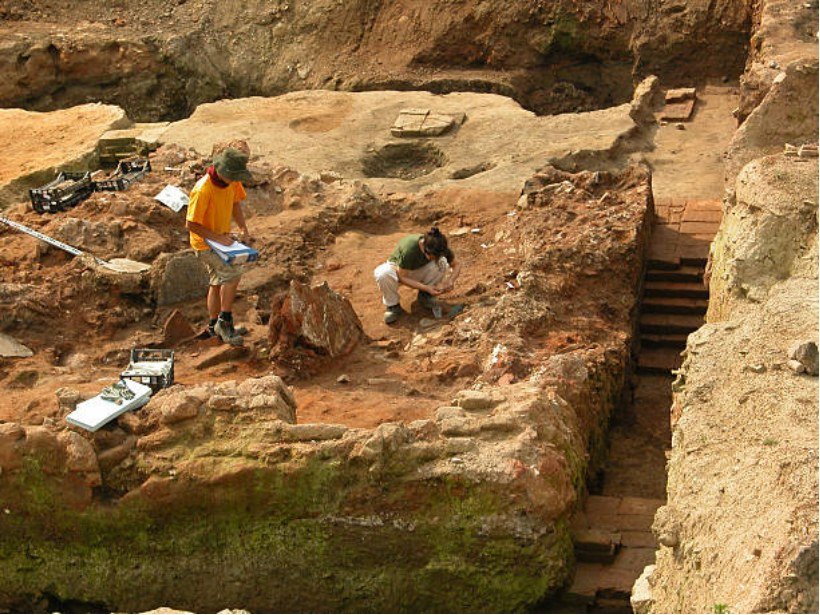
Archaeologists work on rough, uneven terrain, so trips, falls and dropped boxes are a real risk. One fall can damage a precious artifact and destroy valuable information about our past. Peer-reviewed studies and guidelines agree that post-excavation transport is still one of the least engineered and riskiest parts of archaeological work.
“Accidental breakage is the most common form of damage to objects and causes new problems, as small loose pieces can become dissociated from the main portion.” Government of Canada, Conservation Guidelines
Most common causes
Slips, trips and falls on uneven terrain, loose rocks or tools left lying around
Poorly supported trenches that collapse unexpectedly
Heat, weather, stress and repetitive motion at excavation sites
Research and our panel of experts
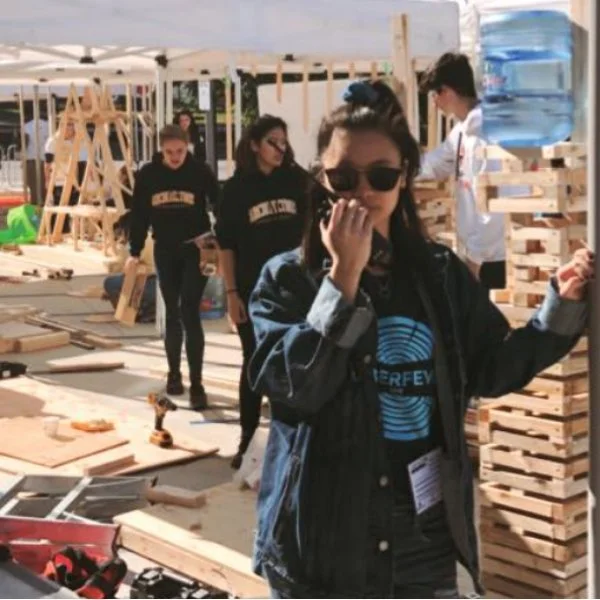
We attended workshops at the Ontario FLL Kickoff (hosted by our school), read archaeology books at the start of the season, and consulted archaeologists and engineers at every stage. They gave us feedback every step of the way and helped shape every iteration of the Smart Box.
ARCHAEOLOGIST
Dr. Chen Shen
Co-Chief Curator at the Royal Ontario Museum, responsible for managing and researching over 41,000 Chinese artifacts.

ARCHAEOLOGIST
Dr. Steven Batiuk
Archaeology professor at the University of Toronto, currently working on a site in Iraq.
His advice: make different sizes and make it collapsible to maximize portability.
ARCHAEOLOGIST
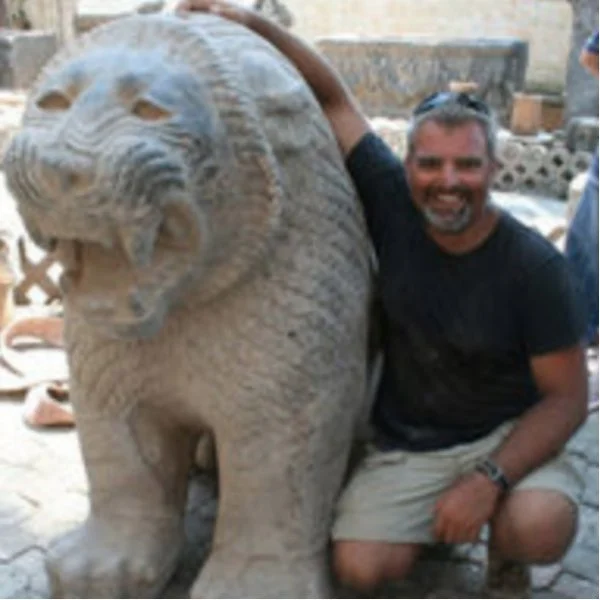
John Dunlop
Professional archaeologist for over 20 years.
His advice: use a standard Bankers’ Box size, closer to what archaeologists already use.
ARCHAEOLOGIST
Dr. Michael Schillaci
Member of our archaeology expert panel.

ARCHAEOLOGIST
Dr. Henry Cary
Member of our archaeology expert panel.

ENGINEER
Chris Brookfield
Member of our engineering expert panel.

ENGINEER
Greg Milligan
Member of our engineering expert panel.

ENGINEER
Curtis Dykstra
Member of our engineering expert panel.

ENGINEER
Claudia Li
Member of our engineering expert panel.
What archaeologists told us
Lots of artifacts to collect, but not enough field storage
Artifacts can be too large and heavy to carry
Many tripping hazards at dig sites
Artifacts often get damaged or lost right after excavation
Carriers must withstand impact and stay lightweight
Getting finds to the lab for analysis is hard
Features they asked for
Different sizes for different artifacts
Collapsible for easy transport to sites
Scalable to Bankers’ Box size, which they use today
How our engineers helped
Designing a testing plan: carrying objects of increasing fragility, plus an off-road test to mimic field conditions
Exploring materials, like Onyx for greater strength and PETG instead of PLA
Solving specific issues, like reducing box swing
Ergonomics, like keeping the overall weight under 50 lb
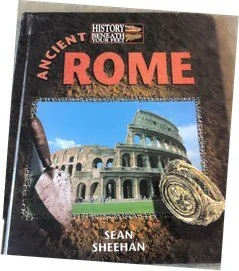
Archaeology books we read
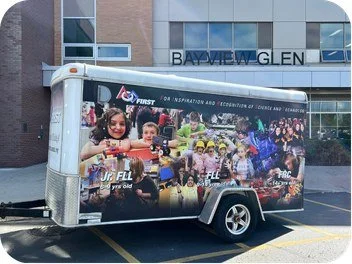
Ontario FLL Kickoff at our school
Archaeology books we read
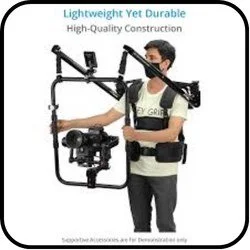
Existing gimbal rigs we compared
2 · Design our solution
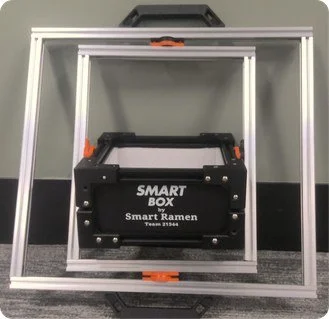
The Smart Box is a line of gimbal-stabilized boxes. The gimbal keeps the box level even when the carrier loses their balance or the box gets jostled, at the dig site or during transport to a museum.
Key features
Lightweight 3D-printed box with a removable, padded lid
Sturdy, lightweight metal frame
4 ball bearings
2 ergonomic grip handles
Foam padding for artifact protection
3 · Create and test
We didn’t stop after building. We tested a lot! In the lab we simulated bumps and tilts, and carried objects of increasing fragility: a rock, an apple and an egg. Then we took the Smart Box outside for off-road testing to mimic real field conditions.
4 · Iterate: 7 versions in one season
Every new version came from what we learned in testing and from our experts’ feedback.
VERSION 1
Concept Test
A mini LEGO version to understand how gimbals work, with motors keeping the box level from gyro sensor pitch and roll readings.
VERSION 2
Smart Box DIY
A gravity gimbal made of PVC pipe. We made a how-to video and shared it so anyone can build their own.
VERSION 3
Smart Box Power
Our top-of-the-line model: a sturdy metal frame, 4 ball bearings, 2 ergonomic grip handles and foam padding.
VERSION 4
Smart Box Elite
A lightweight 3D-printed box with a removable, padded lid.
VERSIONS 5–7
Smart Box 3D
Collapsible and fully 3D printed, with a removable foam sleeve and inserts to resize the inside. It can be sold as an STL file, so there are no shipping costs and the price drops for archaeologists.
WHAT’S NEXT
Lower cost
Archaeologists often have limited research funding and work in rugged conditions, so keeping the Smart Box affordable will stay a focus as we keep iterating.
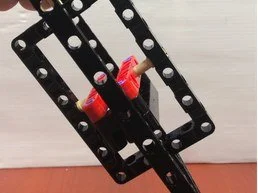
Version 1: testing how a gimbal works

Version 1: mini LEGO model
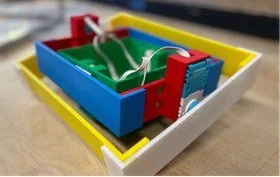
Smart Box 3D prototype
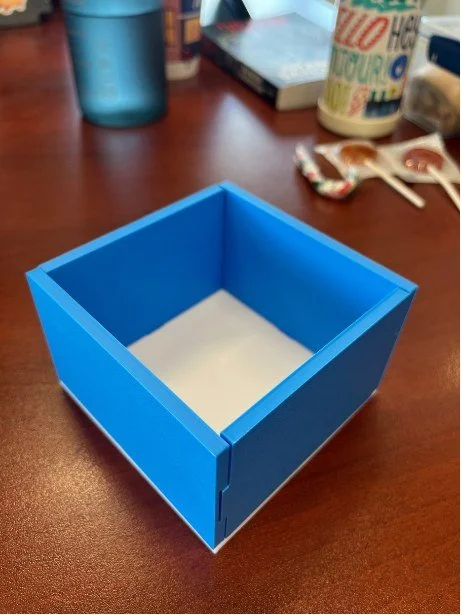
Smart Box 3D, fully 3D printed
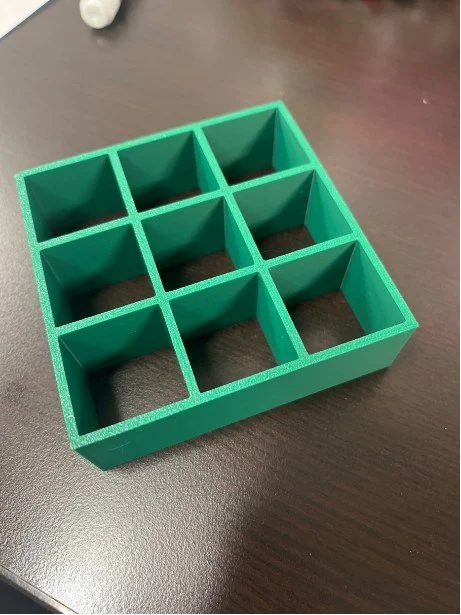
Smart Box 3D inserts to resize the inside
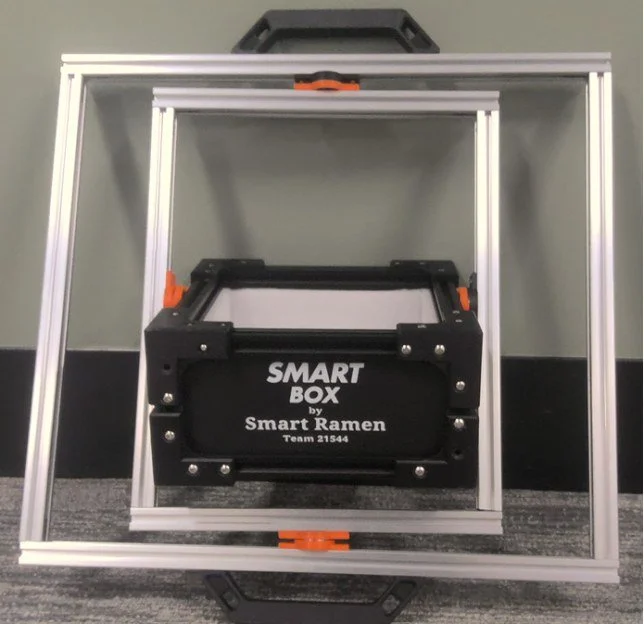
Smart Box Power and Elite: metal gimbal frame
5 · Share it with the world
Because archaeologists often face limited research funding, we priced the Smart Box to stay affordable while keeping a healthy margin.
SMART BOX ELITE
$80
Plastic $5.42 · Bearings (4) $16.96 · Aluminium extrusion $10.00 · Bolts $5.00
Materials: $37.38 · Shipping: $15 · Margin: 35%
SMART BOX 3D
$65
Plastic $10.47 · Bearings $16.96 · Bolts $5.00
Materials: $32.43 · Shipping: $10 · Margin: 35%
THE MARKET
$68,773
Possible profit if we capture 25% of the market: about 3,000 archaeologists in Canada and 5,300 in the US. Not bad for a student social innovation!
End-user cost reduction: 18%
Go-to-market plan
Open call for field testing by archaeologists and researchers
Online and print ads in archaeological publications
Strategic partnerships with archaeology associations, museums and universities
Archaeologists first, because we believe that is where the Smart Box has the greatest impact